
Pan-Indigenization in Tourism
Pan-Indigenization is a topic that comes up a lot in my tourism degree, and it’s one that has become important to me. It refers to the tendency to group all Indigenous Nations into a single, simplified identity. How this shows up in tourism through symbols or displays that are assumed to be “authentic” to that area or culture simply because they are Indigenous, without much thought given to where they actually come from or who they belong to. Looking at the Totem poles in Jasper National Park are a good example of this. While many visitors see them as a positive form of Indigenous representation their placement is outside of their cultural and geographic context can unintentionally suggest that Indigenous cultures are interchangeable.
I see a similar assumption play out in everyday life with thing like getting asked what certain words mean in Secwépemctsín, even though I grew up in the Coast Salish Region and grew up more exposed to Halq’eméylem and even then I don’t speak it fluently.
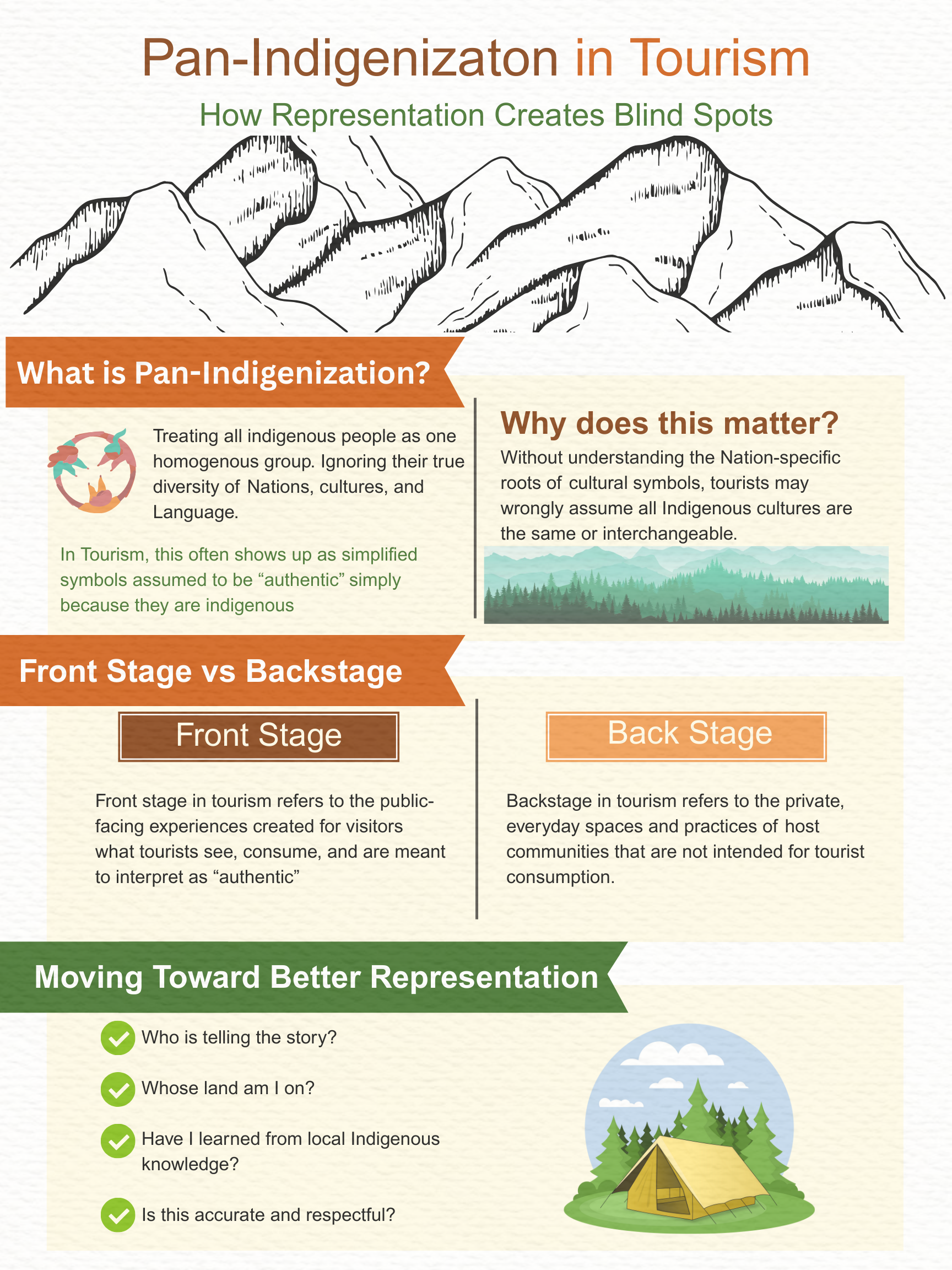
When Indigenous cultures are treated all as one rather than many different diverse cultures, important meaning gets lost. Understanding the difference between front stage and backstage tourism helps show why context, consent, and who is telling the story really matter. If tourism wants to do better, it has to move beyond surface-level inclusion and recognize that not all representation is good representation.Pan-Indigenization matters because representation alone is not enough. In tourism there is often an
assumption that any Indigenous representation is good representation, but when cultures are shown without context, consent or Nation specific voices, they can reinforce stereotypes instead of challenging them. This raises an important question of authenticity: authenticity cannot be defined by tourists, institutions, or industry professionals, but by the Indigenous Nations themselves. Without that authority, representation risks becoming symbolic rather than meaningful.
What does this mean for Tourism/Industry professionals we must move beyond surface level “inclusion” and work directly with specific Nations in place based ways. Which means respecting cultural boundaries, supporting Indigenous led tourism, and being intentional about whose voices are centered in storytelling/interpretation. While pan-Indigenization is not intended to cause harm, its impacts are real. We need to recognize that Indigenous cultures are diverse and that Nations themselves define what is authentic is essential for tourism that claims to be respectful and responsible.